
Agacher Strip War: Conflict and Resolution
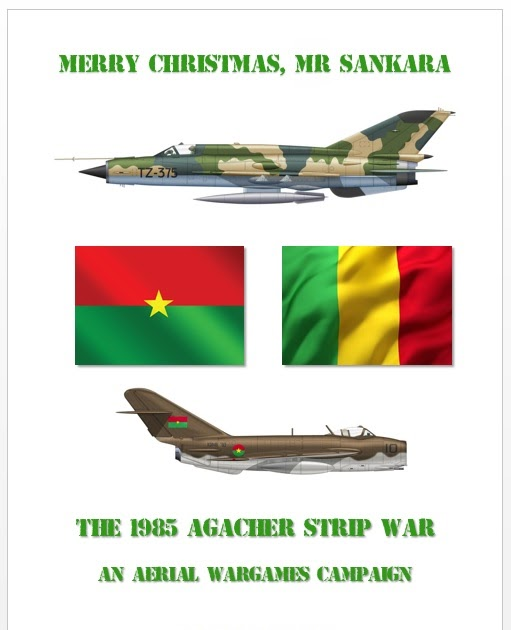
The Agacher Strip War between Burkina Faso and Mali stemmed from a longstanding border dispute over the Agacher Strip. Following clashes in 1974, the Organization of African Unity (OAU) created a mediation commission to resolve the issue and oversee neutral border demarcation. Both countries initially pledged to avoid armed conflict.
By 1983, disagreements over the commission’s work reignited tensions. Thomas Sankara, Burkina Faso’s leader, held personal animosity toward Mali’s President Moussa Traoré, who had overthrown a leftist regime. In September 1983, with Algeria mediating, both leaders agreed to have the dispute adjudicated by the International Court of Justice (ICJ). However, relations soured further in 1985 when Burkina Faso declared a Malian official unwelcome for criticizing Sankara’s regime, and Sankara called for revolution in Mali, exacerbating tensions during a period of Malian unrest.
Hostilities escalated in late 1985 after a series of border incidents, including Malian police crossing into Burkina Faso to arrest a murderer and detaining local officials. Burkina Faso responded by notifying neighboring nations of a planned census, during which military personnel were sent to the disputed region. Mali accused Burkina Faso of coercing its citizens in border villages to participate in the census. Despite Burkina Faso’s withdrawal of troops following mediation efforts by ANAD (a West African treaty organization) and Algeria, both sides exchanged inflammatory messages.
Malian leaders, viewing Sankara as a threat, prepared for war. On 25 December 1985, Mali launched a large-scale invasion with approximately 150 tanks, targeting multiple locations in Burkina Faso and attempting to encircle Bobo-Dioulasso. The Burkinabé army, outgunned and overwhelmed, struggled to repel the offensive. Mali quickly captured several towns in the Agacher Strip. In response, Burkina Faso issued mobilization orders, imposed security measures, and organized counterattacks led by Captain Blaise Compaoré, who employed guerrilla tactics against Malian forces.
A ceasefire was brokered by ANAD on 30 December, ending the brief but intense conflict. By this time, Mali had secured much of the Agacher Strip. The war resulted in over 100 Burkinabé and 40 Malian fatalities, along with extensive damage to Burkinabé towns like Ouahigouya, Djibo, and Nassambou.
On 17 January 1987, Sankara and Traoré formalized peace at an ANAD summit in Yamoussoukro. The ICJ later divided the Agacher Strip, awarding Mali the western portion and Burkina Faso the eastern section along the Béli River. Both nations expressed satisfaction with the ruling.
Burkina Faso framed the conflict as part of an international conspiracy to undermine Sankara’s government, denying claims it was driven by the Agacher’s rumored mineral wealth. The war’s outcome, however, dented domestic support for Sankara’s regime, as some soldiers criticized his cautious military strategy. The conflict also exposed Burkina Faso’s limited international influence, prompting Sankara to adopt a more moderate foreign policy and improve relations with France.
In the war’s aftermath, Sankara acknowledged his military’s weaknesses, commuted political prisoners’ sentences, and shifted focus away from supporting revolutionary movements abroad, emphasizing national stability instead.
Thank for reading.
𝐂𝐨𝐧𝐧𝐞𝐜𝐭 𝐰𝐢𝐭𝐡 𝐮𝐬:
Website: https://www.africarized.kelvinjasi.net
Subscribe to our YouTube channel: www.youtube.com/@Africarized?sub_confirmation=1
Follow us on Facebook: https://www.facebook.com/africarized/
Follow us on TikTok: https://www.tiktok.com/@africarized
Follow us on Instagram: https://www.tiktok.com/@africarized
Follow us on X: https://x.com/Africarized