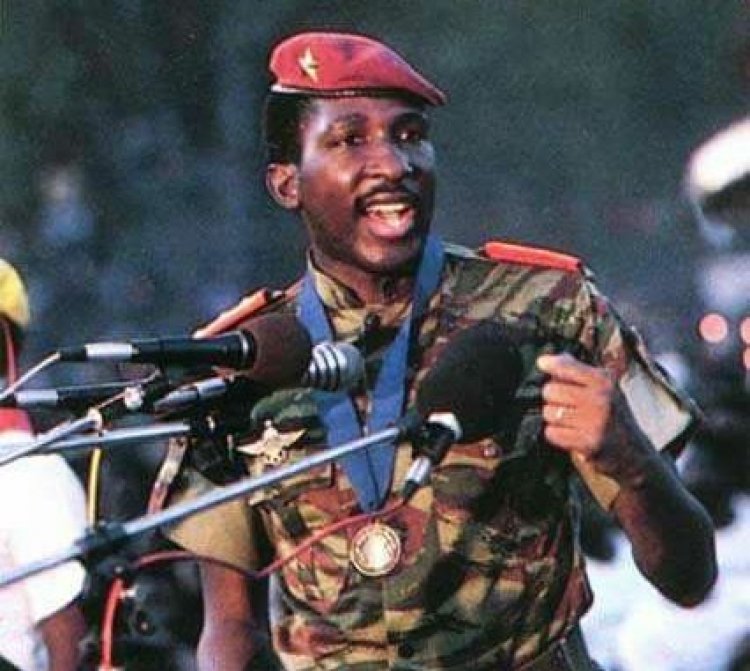
Youngest African President: At just 33 years old, Sankara became president of Burkina Faso in 1983, following a military coup.
Name Change: He renamed the country from Upper Volta to Burkina Faso, meaning “Land of Incorruptible People.”
National Anthem: Sankara composed Burkina Faso’s national anthem himself, showcasing his artistic talents.
Anti-Imperialist: He was an outspoken critic of neocolonialism and Western interference in African politics.
Revolutionary Reforms: He redistributed land from feudal landlords to peasants, improving agricultural output and self-sufficiency.
Women’s Rights Advocate: Sankara banned female genital mutilation, forced marriages, and polygamy and encouraged women to join the workforce and government.
Environmental Efforts: His government planted over 10 million trees to combat desertification.
Healthcare and Vaccination: Sankara launched a massive vaccination campaign, immunizing over 2.5 million people against diseases like measles, meningitis, and yellow fever.
Education Drive: He significantly increased literacy rates by initiating a nationwide literacy campaign.
Simple Lifestyle: Sankara refused luxury as a leader, driving a modest Renault 5, reducing his salary to $450/month, and living simply.
National Pride: He required public servants to wear traditional Burkinabé clothing made from locally produced cotton.
First Supermarket: Sankara transformed a military supply store into the country’s first supermarket, accessible to all citizens.
Debt Resistance: At the Organization of African Unity in 1987, he called for African nations to reject paying foreign debts, arguing they were a tool of oppression.
Cuba Connection: Sankara sent 600 young Burkinabés to Cuba for education and training in medicine and agriculture.
Opposed Aid Dependency: He rejected foreign aid, famously saying, “He who feeds you, controls you.”
Youth Involvement: He established the Pioneers of the Revolution, encouraging young people to participate in national development.
Unifying Symbol: His leadership fostered a strong sense of national identity and pride among Burkinabé citizens.
Africa’s Che Guevara: His revolutionary ideas and charisma earned him the nickname “Africa’s Che Guevara.”
Tragic Assassination: Sankara was killed in 1987 during a coup led by his former ally Blaise Compaoré, who reversed many of his reforms.
Lasting Legacy: Sankara remains a symbol of integrity, anti-corruption, and African self-reliance, with monuments and honors dedicated to his memory across the continent.