
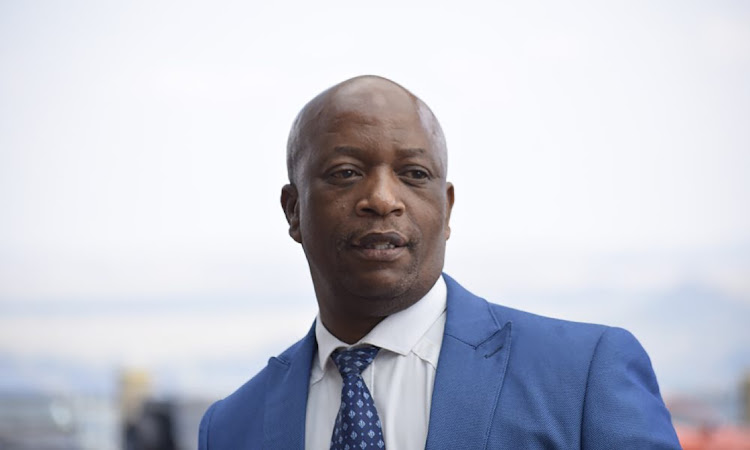
Lesotho Politician Claims Land from South Africa in Historic Debate
In a bold move that has reignited a long-standing historical dispute, a Lesotho politician has called for the return of land annexed by South Africa over a century ago. Thabane Lehloka, a minor opposition leader from the Basotho Convenient Movement, has been at the forefront of this debate, urging the Lesotho government to reclaim territories he believes rightfully belong to the Basotho people.
Lehloka, who holds one seat in Lesotho’s 120-member parliament, brought forward a motion in March 2023 proposing the reclamation of large parts of South African land. He argued that these territories, including the entire Free State and four other adjacent regions, were historically part of Lesotho before being taken by the Boers and British during the colonial era. “History has a record of what was taken from our people, and people were killed in the process,” Lehloka stated during the parliamentary debate. “It’s time to correct that. It’s also time for what is ours to be returned to us.”
The Free State, which spans 130,000 square kilometers, is more than four times the size of Lesotho. The claimed areas are home to a significant Basotho population, with around 4 million Basotho living in South Africa compared to Lesotho’s 2.3 million. Lehloka emphasized that these lands are not only historically significant but also economically vital, particularly the fertile lowlands that were lost through treaties like the 1869 Treaty of Aliwal North.
The motion has sparked widespread discussion within Lesotho, with many Basotho supporting the call for land reclamation. According to an August 2024 Afrobarometer survey, 71% of Basotho believe their government should pursue the return of these territories. Support is particularly strong among rural and peri-urban residents, with 78% and 75% respectively endorsing the idea, compared to 61% of urban dwellers. However, fewer than half of those with post-secondary education (45%) support the motion, highlighting a divide based on educational attainment.
Despite the growing support, experts remain skeptical about the feasibility of the claim. South Africa’s borders are internationally recognized, and the 1964 Cairo Declaration by the Organization of African Unity (now the African Union) solidified the principle of maintaining colonial-era borders to prevent regional conflicts. King Letsie III of Lesotho has previously made similar claims without success, further casting doubt on the likelihood of the motion being realized.
Adding another layer to the debate, a faction within Lesotho has taken a different stance. In 2018, the Free Basotho Movement petitioned the Lesotho UK Embassy, requesting that Lesotho be integrated as a 10th province of South Africa. They argued that this would eliminate border restrictions and grant Basotho citizens access to the benefits of South African nationality. This proposal, however, has not gained significant traction.
As the debate continues, many Basotho remain caught in challenging economic conditions. Lesotho, a small, mountainous kingdom entirely surrounded by South Africa, relies heavily on its neighbor for trade and employment. With a GDP of 2.21 billion in 2023 and an average GDP per capita of 2.21 billion in 2023 and an average GDP per capita of 950, Lesotho’s economy is dwarfed by South Africa’s, where the average GDP per capita stands at $6,600. The country’s diamond exports, which accounted for 23% of total exports in 2023, provide some economic relief, but poverty and unemployment remain pressing issues.
Lehloka’s motion, while symbolic, has yet to gain majority support in parliament, and its future remains uncertain. The Lesotho government faces the challenge of balancing historical grievances with the practicalities of modern diplomacy and economic dependency on South Africa.
As the conversation unfolds, the question remains: Should Lesotho prioritize reclaiming lost land, or focus on addressing the immediate needs of its people? What do you think? Share your thoughts in the comments below.
Thank you for reading. If you found this article insightful, don’t forget to check out our other videos for more engaging content. Cheers!