
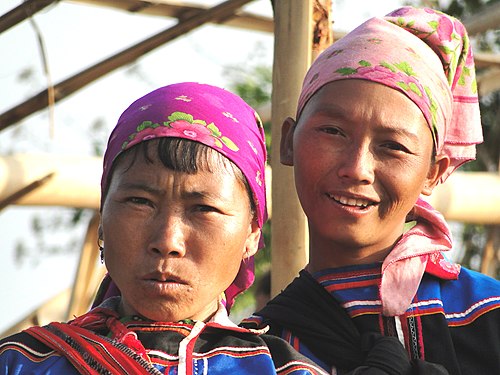
Across the rugged mountains straddling Myanmar and China lives a community whose story is rarely told—yet deeply fascinating. The Wa people, known in their own language as Vāx, are an ethnic group rooted in the borderlands between northern Myanmar’s Shan and Kachin State and China’s Yunnan Province. Though far from the African continent, their ancient traditions, belief systems, and cultural expressions echo themes found across African societies, making them an intriguing feature of what we call the Hidden African Diaspora.
Origins and Early History
According to Wa oral history, the first people emerged from two ancestral mothers—Ya Htawm and Ya Htai—who began life as tadpole-like beings in a sacred lake called Nawng Hkaeo. This creation story, rich with symbolism and nature-centered spirituality, reflects cosmological patterns found in many Indigenous African traditions where humanity arises from the earth or water.
Although written records about the Wa are sparse, regional legends maintain that vast portions of modern eastern Myanmar and parts of southern China were once Wa territory. Over time, shifting regional powers—including Tai principalities and later Burmese and Chinese influence—reduced their lands. By the time of British colonial rule, the Wa were marginalized and largely misunderstood.
Cultural Identity and Spiritual Traditions
Historically, the Wa practiced animism, believing that spirits inhabit the natural world. Rituals involving animal sacrifice—often chickens, pigs, or water buffalo—were central to community life, serving as ways to address illness, ensure agricultural fertility, or honor ancestral spirits.
While early European narratives sensationalized the Wa as “wild” due to headhunting practices, modern scholarship shows that these rituals were symbolic acts tied to fertility rites and protection—not wanton violence. The caricature overshadowed the community’s rich cultural heritage, much like many African societies misrepresented through colonial lenses.
Today, many Wa are Christian or Buddhist, yet traditional practices remain deeply respected, especially during weddings, funerals, and agricultural festivals.
Dance, Music, and Social Life
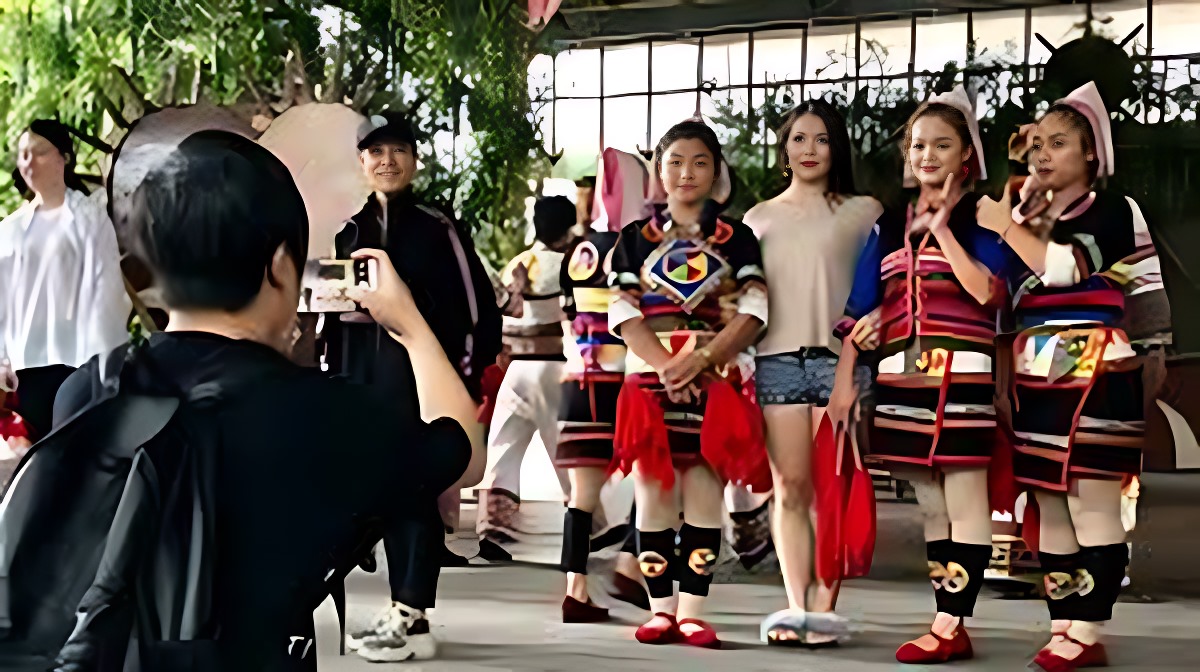
Wa culture is vibrant and expressive. Their dances—such as the hair dance and drum-led group performances—are energetic displays of unity and identity. A massive hollow wooden drum often sets the rhythm, echoing traditions reminiscent of African communal drumming and movement.
The Wa Women’s Association plays a key role in protecting cultural knowledge, promoting dance, craft-making, and community development.
Modern observers often find the Wa communities’ traditional monogamy and open approach to relationships before marriage surprisingly progressive.
And yes—the Wa are known across China for their strong drinking culture, especially a potent local moonshine central to celebrations and bonding.
Language and Writing
The Wa language belongs to the Palaungic branch of the Austroasiatic family. It traditionally had no written script until the 20th century, when Christian missionaries introduced a Latin-based alphabet for Bible translations.
Today, two main writing systems exist:
- Revised Bible orthography, mostly used in Myanmar and Thailand
- PRC orthography, a pinyin-based system promoted in China
Much like other marginalized ethnic groups worldwide, literacy efforts among the Wa have become part of a broader cultural preservation movement.
Colonial Rule and Enduring Misrepresentation
During British rule, the Wa region was largely ungoverned due to its remoteness. Colonial officers depicted the Wa as uncivilized, reinforcing stereotypes that persist today. Meanwhile, Chinese historical texts rarely portrayed them negatively. These conflicting portrayals highlight how much of the Wa narrative has been shaped—or distorted—by outsiders.
In modern times, global media often associates the Wa with armed resistance movements and drug production, overshadowing their cultural depth and resilience.
Life After World War II
The division of the Wa homeland by the Myanmar–China border reshaped the community. In Myanmar, political turmoil, communist insurgencies, and opium cultivation deeply affected the region. By the late 1980s, the Wa organized the United Wa State Army (UWSA), negotiating limited autonomy with Myanmar’s government. This led to the formation of the Wa Self-Administered Division in 2010.
Despite outside labels, most Wa people remain farmers living quiet, rural lives rooted in tradition.
Where the Wa Live Today
In China
Over 400,000 Wa live in Yunnan Province, especially in autonomous counties such as Ximeng, Cangyuan, Menglian, and Gengma. Some groups, like the Benren, are officially classified as Wa yet maintain a distinct identity.
In Myanmar
The Wa are one of Myanmar’s officially recognized ethnic groups, though they constitute only a small percentage of the national population. Most live in villages near Kengtung and along the China border. Their autonomous region, often called Wa State, remains culturally and linguistically distinct.
In Thailand
In recent decades, Wa families have migrated to northern Thailand—particularly Chiang Rai and Chiang Mai—though they lack official tribal recognition there.
Why the Wa Matter in the Hidden African Diaspora
The Wa story resonates with Africarized’s mission: uncovering connections and shared human experiences across continents. Their spiritual traditions, communal structures, dance culture, and historical misrepresentation parallel patterns seen across the African world. Though not genetically African, their experiences echo a broader theme—Indigenous peoples across the world surviving colonization, cultural suppression, and political marginalization while fiercely preserving their identity.
Continue the Journey With Us
If you’re passionate about the global African story and the cultures connected to it, be sure to join the Africarized community: