
By Africarized Staff Writer | November 24, 2025
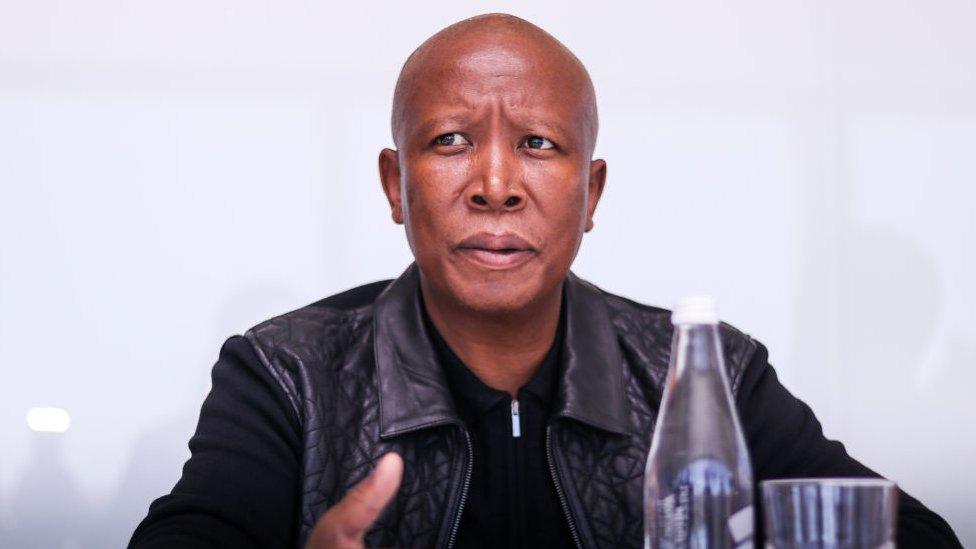
Julius Malema has never been one to tiptoe around geopolitical tension. But his latest criticism of African heads of state cuts deeper than usual—because it hits at one of the continent’s oldest wounds: silence in the face of imperial pressure.
Following the recent diplomatic clash between President Cyril Ramaphosa and the U.S. administration, the Economic Freedom Fighters (EFF) leader delivered a fiery rebuke, accusing African presidents of abandoning South Africa at a moment demanding unity.
According to Malema, the continent’s failure to defend Ramaphosa sends a dangerous message to global powers:
Africa still stands divided, even when one of its own is under attack.
“South Africa Takes Bullets for This Continent”
Malema’s frustration stems from two major incidents:
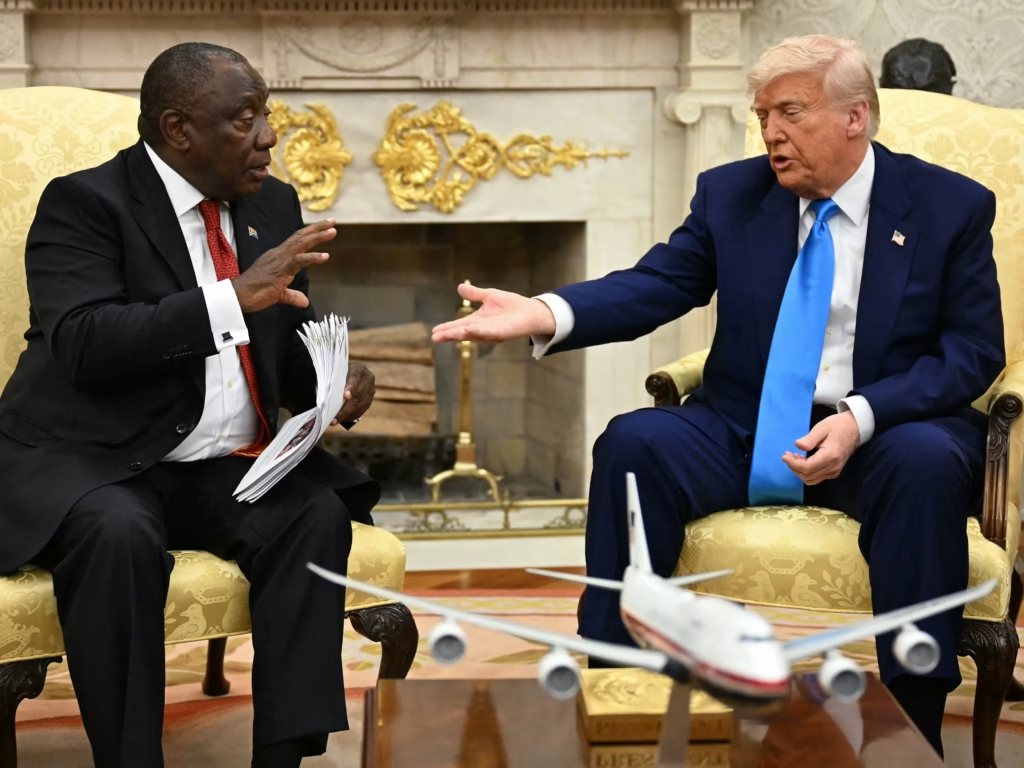
- President Ramaphosa’s confrontational exchange at the White House four months ago
- A second public criticism by the U.S. just last week
It’s a level of solidarity Africa has never mastered.
In both cases, Malema says Africa opted for silence.
“South Africa takes the bullets for this continent in SADC, in Africa, and on the global stage,” he said.
“Yet when Ramaphosa was ambushed in Washington, not a single African leader stood up. Not one.”
Malema compared this to Europe’s reflexive unity earlier in June, when Ukraine’s President Volodymyr Zelensky faced diplomatic pressure. Within hours, European presidents lined up to defend him—not because they all agreed with him, but because they defend their own at all costs.
“This Is the Gaddafi Script All Over Again”
Malema’s warning echoes a painful chapter in African history: the isolation of Libya’s Muammar Gaddafi.
When NATO targeted him, the continent did not mount a unified defense. Silence, hesitation, and division left Libya vulnerable—and the consequences reshaped Africa forever:
- Libya collapsed into chaos
- Thousands died in the aftermath
- African migrants became slaves in open-air markets
- The AU lost one of its strongest proponents of a united Africa
Malema fears that allowing the U.S. to attack South Africa publicly while African leaders watch from the sidelines opens a dangerous door.
“This is the same script they used against Gaddafi,” he said.
“Weaken the leader through silence. Divide the continent. Then move in.”
His argument is clear:
If Africa does not protect each other, outside powers will keep exploiting our divisions.
The G20 Summit on African Soil—and an American Boycott
This diplomatic tension unfolded just as South Africa hosted the first G20 Summit ever held on African soil—a historic moment overshadowed by U.S. absence.
The summit ended on November 23 with an agreement emphasizing multilateral cooperation, climate action, and tackling global inequality.
Despite the U.S. boycott, Ramaphosa insisted the world still recognized the importance of collective leadership.
Brazilian President Lula downplayed America’s absence, calling it insignificant.
German Chancellor Friedrich Merz, however, criticized the boycott as “not a good decision.”
The U.S. President, Donald Trump, skipped the summit citing a debunked conspiracy theory involving South Africa’s white minority—fueling speculation that Washington was signaling displeasure with Pretoria’s foreign policy trajectory.
The ceremonial G20 presidency handover was postponed and delegated to junior officials.
The message was unmistakable:
The U.S. wanted the world to see South Africa punished.
Malema wanted African leaders to see it too.
Where Was Africa’s Voice?
The central question Malema poses is uncomfortable:
Why does Africa remain silent when one of its leaders is targeted on the global stage?
Is it fear? Dependency? Fragmentation?
Or a lingering colonial mindset that still shapes diplomacy across the continent?
Malema believes this silence:
- Weakens Africa geopolitically
- Encourages outside interference
- Undermines continental confidence
- Signals that Africa has no united front
- Risks repeating the tragedies of Libya, Sudan, and the DRC
His critique is not simply about Ramaphosa—it is about a broader pattern where African leaders rarely defend one another unless the issue is already “safe.”
And when Africa stands divided, its enemies thrive.
A Continental Lesson in Unity—or Division
The Johannesburg G20 Summit ended with commitments toward peace in:
- Ukraine
- Sudan
- The Democratic Republic of Congo
- Occupied Palestine
But peace outside Africa means little if Africa cannot find peace—and unity—within its own borders.
The U.S.–South Africa clash was not just a diplomatic row.
It was a test of Africa’s willingness to stand together.
Malema’s message is uncomfortable, but it is a truth Africa must face:
Unity cannot be a slogan. It must be an action.
No African nation—no matter how powerful—can confront global pressure alone.
Final Reflection
Whether one agrees with Malema’s politics or not, his critique touches a core issue:
Africa cannot afford silence. Not anymore.
A continent with the minerals the world needs, the youth the world desires, and the markets the world relies on must not behave as though it is powerless.
If Africa does not speak for itself, others will speak for it.
If Africa does not defend its leaders, others will pick them apart.
If Africa does not unite, it will remain vulnerable to external manipulation.
African unity is not a dream.
It is survival.
🛍️ Visit the Africarized Shop for African-inspired apparel and art that celebrates our spiritual heritage.
📺 Don’t forget to subscribe to Africarized History for more powerful stories about Africa’s wisdom, resilience, and legacy.